
How many units do I need?
Start with your worker or guest count, then apply OSHA's ratio. Construction sites follow OSHA 1926.51(c)(1): one toilet for 20 workers or fewer, then one seat and one urinal per 40 workers once you pass that mark, dropping to one per 50 at 200 or more. A 15-person crew in Vancouver needs one standard unit. A 45-person crew needs two. Farms with hand-labor employees fall under a different rule: OSHA 1928.110 calls for one facility per 20 workers, reachable within a quarter mile walk, plus potable water. Events run looser math based on hours and alcohol service, so check our guide on how many porta potties you need before you guess. If you're mixing crews and guests on one job site, like a Vancouver renovation with a dumpster and a portable restroom both on site, count them separately. Don't assume one unit covers both. For ADA compliance, ADA Standards section 213.2 requires at least 5 percent of clustered units be accessible, never fewer than one. Review the full ADA restroom requirements if the public will be on site.
What size and type do I need?
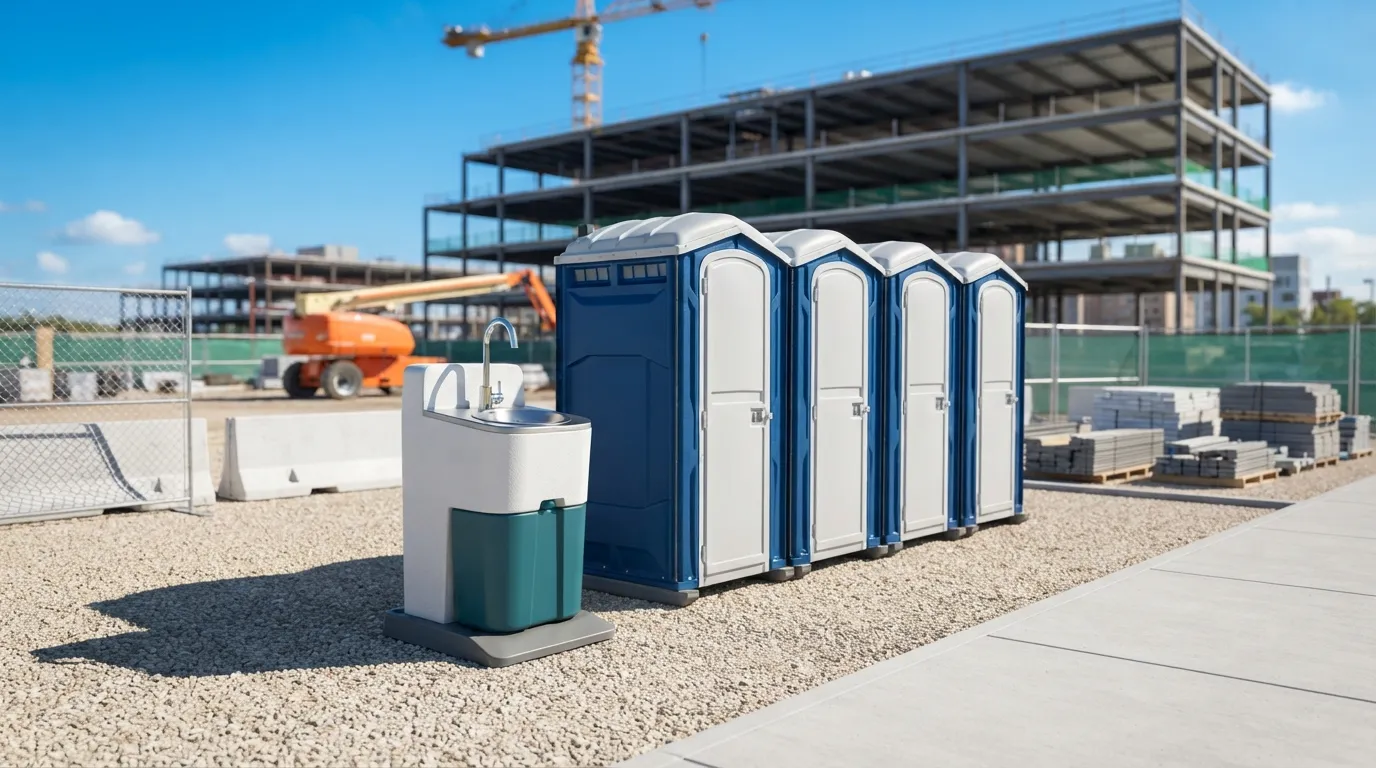
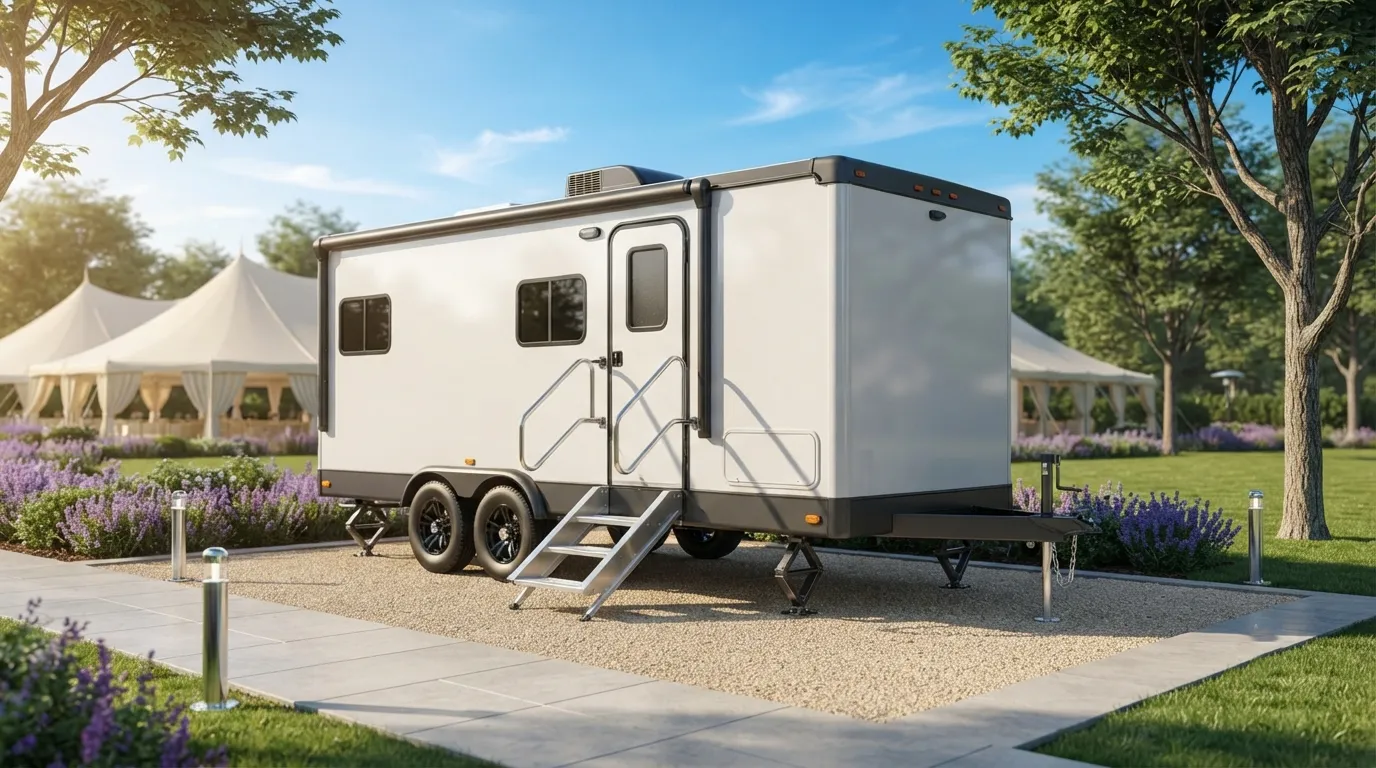
A standard porta potty measures about 44 by 48 inches on the ground and stands roughly 92 inches tall, with a 60 to 70 gallon holding tank built in. That covers most construction site services and short-term rentals. If guests expect more, step up to a deluxe flushable unit or a full restroom trailer rental with running water and separate stalls. Weddings and corporate events usually lean toward the luxury restroom trailer or a 2 stall restroom trailer for smaller guest counts, scaling up to an 8 stall restroom trailer for larger crowds. Job sites doing paint, coatings, or pesticide work trigger a different rule: OSHA 1926.51(f)(1) requires washing facilities specifically for that contaminant exposure, not general hygiene. Pair any toilet order with a handwashing station rental or a portable sink rental to cover that. Under 29 CFR 1910.141(d)(2), washing stations need actual soap and a towel or drying device. Hand sanitizer alone doesn't satisfy it, so don't substitute a hand sanitizer station rental where soap and water are required.
Where should the unit go on my site?
Give the delivery driver a clear, stable spot. ADA Standards section 302.1 requires firm, slip-resistant ground for any accessible unit, and section 304.3.1 calls for a 60 inch turning circle in front of the door. If you're renting a roll-off dumpster alongside your restroom, the truck needs about 60 feet of straight clearance behind it to set the container down. Keep both away from soft ground, slopes, and low branches. Placement in the public right-of-way in Vancouver needs confirming with the city before delivery, so check porta potty permit requirements if the unit sits on a street, sidewalk, or city easement rather than private property. Our full porta potty placement guide covers ground clearance, wind exposure, and service truck access in more detail. If you're fencing off a work zone at the same time, a temporary fence rental or chain link temporary fence keeps foot traffic away from both the toilet and any open trenches. Sites running after dark should also look at a light tower rental so the path to the unit stays visible and OSHA's illumination rules under 1926.56(a) stay covered.
Do I need extras like handwashing or fencing?
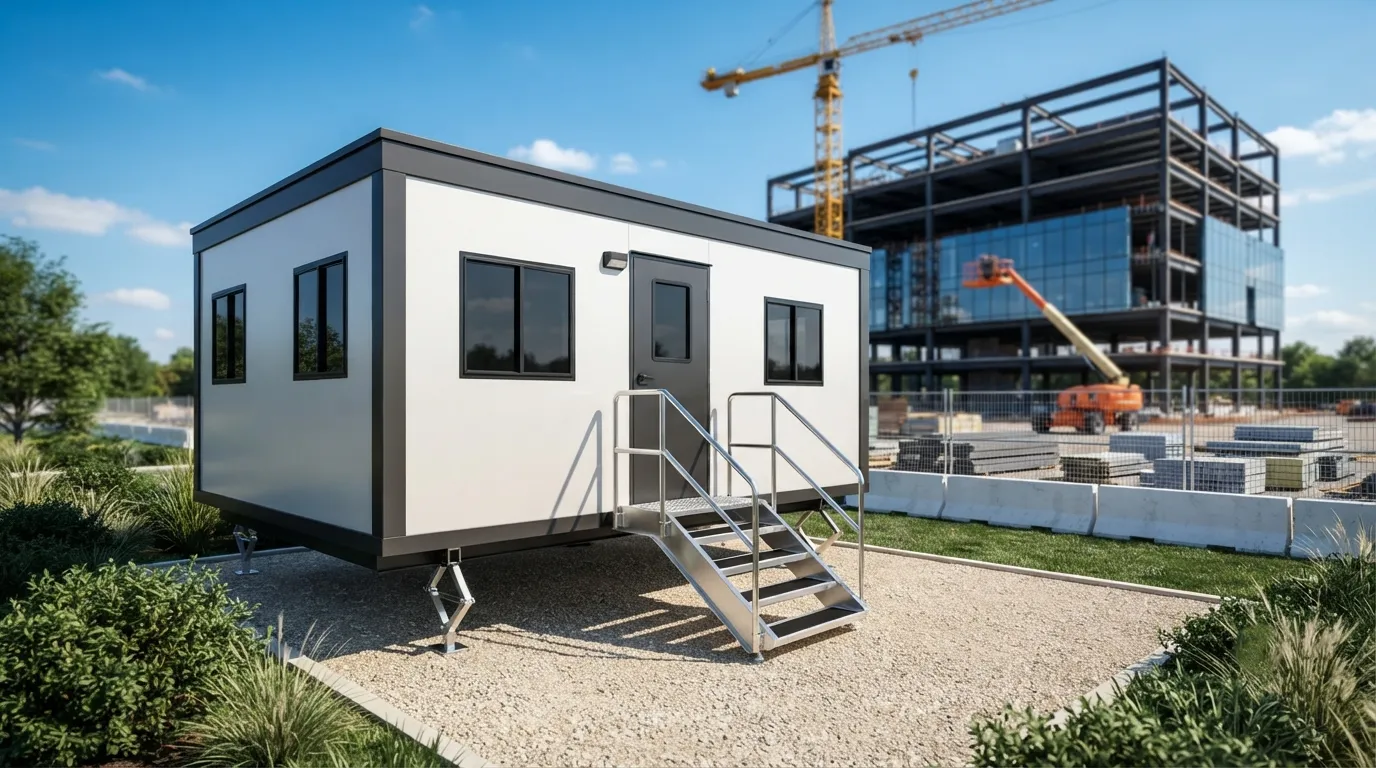
Most Vancouver job sites need more than just a toilet. Add a handwashing station rental any time crews are eating on site or handling food, materials, or chemicals. If your project also generates debris, bundle in a roll-off dumpster rental, and check what cannot go in a dumpster before crews start filling it, since OSHA 1926.25 and 1926.252 both touch on debris handling and disposal. Storage is another common add-on: a storage container rental or 20ft storage container keeps tools locked up between phases. For septic-dependent properties nearby, a residential tank is typically pumped every 3 to 5 years depending on tank size and household size, so pair your rental period with a septic pumping service if the property's system is already due. Crews working sites 6.4 miles northeast in Orchards or 11.7 miles north in Battle Ground call in the same checklist; distance from Vancouver doesn't change the math, just the delivery window.
Frequently Asked Questions
How far in advance should I book?
Standard units book fastest, but weekend and event trailers fill up first. If your event falls on a weekend, call at least a week out. Emergency needs still get same-day options through emergency porta potty rental when something breaks or a job starts sooner than planned.
What information does Vancouver Porta Pros need from me?
Headcount, event or job duration, delivery address, and whether the site has slope, gravel, or overhead lines. That's enough for a quote. Add whether you need handwashing station rental or fencing, since those often ride on the same delivery truck.
Do I need a permit for a porta potty in Vancouver?
It depends on where the unit sits. Private property usually doesn't need one, but right-of-way placement needs confirming with the city. See porta potty permit requirements before you commit to a curbside spot.
How often does the unit get serviced?
The industry baseline under ANSI/PSAI Z4.3 is one service visit per week for up to 10 users across a 40 hour week. Higher headcounts or multi-day events need more frequent pumping. Ask about your specific schedule at booking.
Can I rent just for a weekend?
Yes. Weekend rentals are common for weddings, sports tournaments, and small events, and pricing sits between the daily and weekly rate. Check porta potty rental per day for the shorter comparison before you decide on length.
Next step
Get a delivery date
Tell us the address, the dates and the headcount. We size the order and confirm the route.