
Where should a porta potty go on a job site?
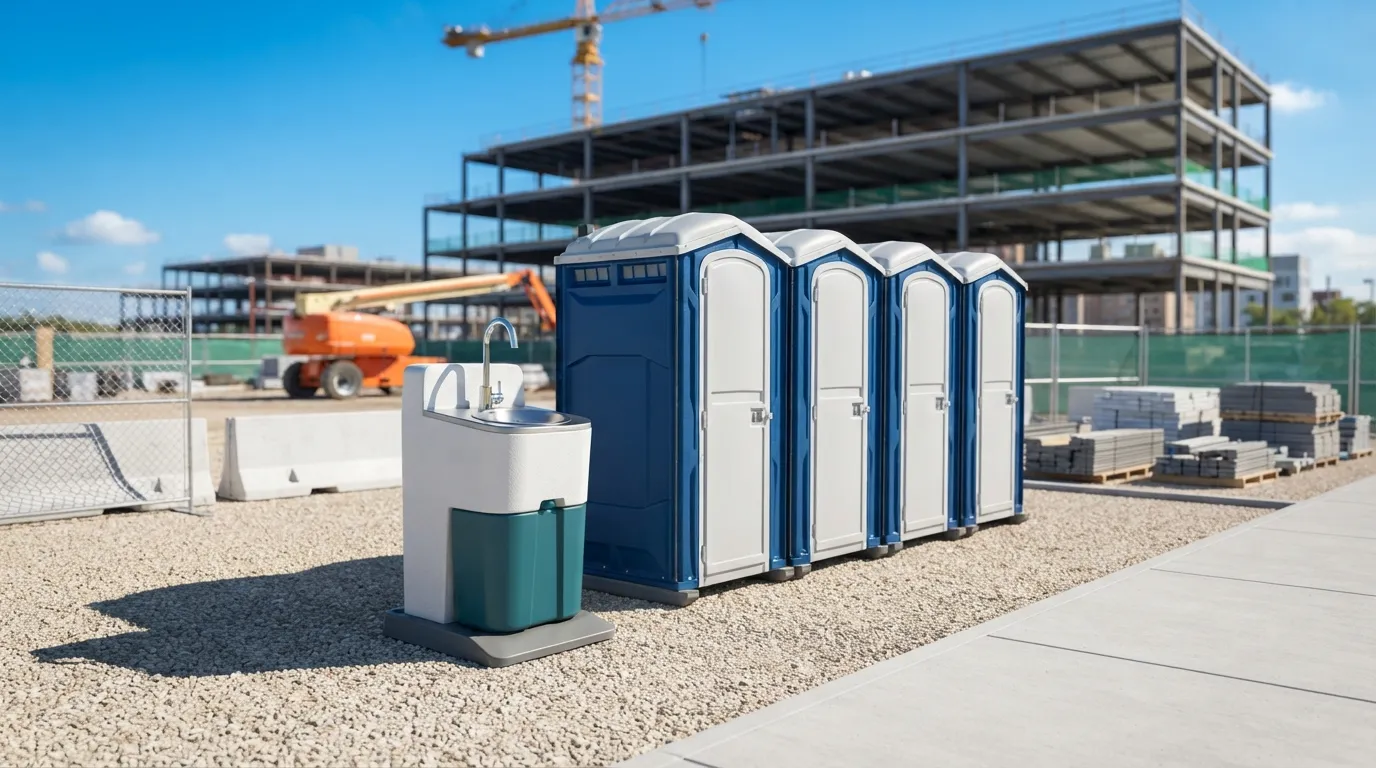
Put it where the truck can reach it without threading through parked equipment. A standard porta potty rental needs a level pad roughly 44 by 48 inches, and the unit stands about 92 inches tall, so overhead branches and wires matter as much as the ground underneath. On construction sites, OSHA 1926.51(c) sets the toilet count itself, one unit per 20 workers, but placement is a separate question the regulation does not answer for you. Keep units within a short walk of the active work area, away from excavation edges, and clear of any spot where a roll-off dumpster rental or material stockpile might need to sit later. If you are also planning a temporary fence rental around the perimeter, place the toilets inside that line, not outside it, so nobody has to leave a secured site to use one. For events, the same logic applies at a smaller scale: keep event restroom rental units near the crowd but out of the main sightline, and check our porta potty rental checklist before delivery day so nothing gets rushed.
What are the porta potty placement rules for accessibility?
ADA units need extra room, not just extra care. ADA Standards 213.2 requires that where single-user units are clustered, at least 5 percent must be accessible, with a minimum of one no matter how small the cluster. That accessible unit needs a 60 inch turning circle under ADA Standards 304.3.1, a door opening of at least 32 inches per ADA Standards 404.2.3, and a route at least 36 inches wide under ADA Standards 403.5.1 to get there. Ramp slope on any approach can't exceed 1:12 per ADA Standards 405.2. If your site is uneven, that ramp requirement often decides where the unit goes before anything else does. See our ADA accessible porta potty page for unit specs, and if the event is large enough to need several accessible stalls, a 4 stall restroom trailer sometimes solves the routing problem better than scattered single units. Reach on any fixture also has to clear ADA Standards 308.2.1, and door hardware needs to open with one hand and under 5 pounds of force per ADA Standards 309.4.
Do I need a permit to place a porta potty in Vancouver?
This is one to confirm directly with the city rather than guess at. Placement in the public right of way, on a sidewalk, or in a street parking lane usually needs sign-off, but the exact process, fee and paperwork are not something we can state here without checking Vancouver's current rule. The same caution applies to dumpster placement permit cost questions. If a construction dumpster rental or a 20 yard dumpster rental is going anywhere near a curb or street, call the city before delivery, not after. Keeping equipment fully on private property sidesteps most of this, and our porta potty permit requirements page walks through what to check before you commit to a spot. The same goes for dumpster permit requirements if trash removal is part of the same job.
How far from the work area should a porta potty be placed?
Close enough that nobody skips using it. That is the real rule behind every written standard. Field crews working under OSHA 1928.110 need a facility within a quarter mile walk, one per 20 hand-labor employees, which is a useful yardstick even off the farm. On a tight urban lot in Vancouver, that quarter mile is rarely the limiting factor. Truck access is. A roll-off dumpster rental delivery needs about 60 feet of straight clearance behind the truck, and porta potty service trucks need a similar unobstructed lane, so plan both on the same access route if the site allows it. If your crew works with paints, coatings or solvents, OSHA 1926.51(f)(1) requires washing facilities nearby, and a handwashing station rental placed right next to the toilets covers both needs in one spot. For general water access on any site, OSHA 1926.51(a)(1) requires an adequate potable supply regardless of trade. Homeowners doing a home renovation porta potty job usually just need the unit near the driveway, out of the way of dumpsters and deliveries.
Sites in Minnehaha, 2.6 miles northwest of downtown Vancouver, and Hazel Dell, 6.4 miles northwest, follow the same placement logic even though they sit outside the city core. If your job is in Camas, 11.7 miles east, or Battle Ground, 11.7 miles north, the access and clearance rules do not change, just the drive time for service.
| unit | day | week | month |
|---|---|---|---|
| standard | $100-350 | $130-500 | $125-325 |
| ada | $200-400 | $240-400 | n/a |
| deluxe | $85-1200 | $150-290 | n/a |
Full detail on rates lives on our porta potty rental cost and porta potty rental per day pages, with longer-term numbers on monthly porta potty rental.
Does a mobile office trailer need special placement too?
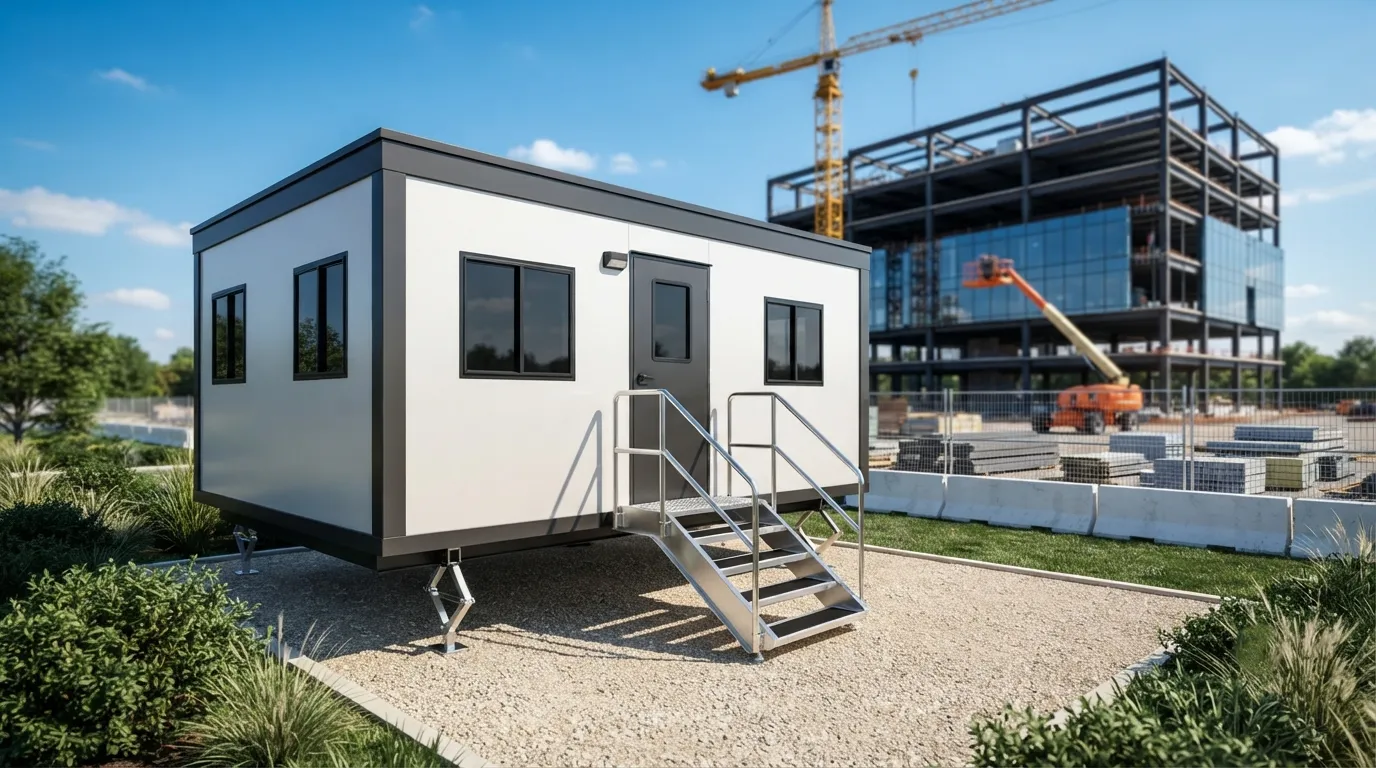
Yes. It needs level, compacted ground and clearance for door swing, same as a restroom unit. If you're replacing worn parts like mobile office trailer replacement doors, that work is easier done before final placement, not after the trailer is wedged into a tight corner. See mobile office trailer rental for setup specs.
Can a septic tank be pumped without moving anything nearby?
Usually, yes, if the access lid is exposed. A typical residential tank needs pumping every 3 to 5 years depending on size and household use. Keep the area over the tank clear of parked equipment. Details on septic pumping service cover access needs.
What replacement parts does an Ozark River portable sink use?
We stock common wear parts, hoses and pump kits for the sink brands we rent, so a broken part rarely means a full unit swap. Ask when you book through portable sink rental and we'll confirm what's on hand.
Is a placement permit the same as a dumpster placement permit?
No, they're handled separately by the city even though the logic overlaps. Confirm both directly with Vancouver before delivery day. Our dumpster placement permit page has more on what to check.
How many porta potties does a mid-size job actually need?
It depends on crew size and duration, but OSHA 1926.51(c) gives the baseline ratio for construction. Use our how many porta potties do i need guide to run the numbers for your specific headcount.
Next step
Get a delivery date
Tell us the address, the dates and the headcount. We size the order and confirm the route.