
How many restrooms does a county fair need?
Start with peak hourly attendance, not the daily total, because everyone hits the restrooms between events. OSHA 1926.51(c) sets construction ratios at 1 toilet per 20 workers, and while a fair is not a jobsite, it is the closest published ratio and most fair organizers in Vancouver scale from it. For a fairground pulling several thousand daily visitors, that means clusters of standard units spread across midway, grandstand and vendor areas rather than one bank near the entrance. ADA Standards 213.2 requires at least 5 percent of any cluster to be accessible, never fewer than one, so a bank of twelve needs at least one ADA unit with a 60 inch turning circle inside per ADA Standards 304.3.1. We also run handwashing stations near food vendors, since fairs mean fried food and funnel cakes and sticky hands all day. If your event runs a full weekend, our porta potty placement guide covers spacing so lines do not back into walkways. Vancouver fairgrounds with grandstand seating need extra units near bleacher exits, where crowds bottleneck between the entertainment and the midway. Use our how many porta potties do I need tool to run your own gate numbers before you commit to a count.
What restroom options work best for a multi-day fair?
Standard units handle the midway and vendor rows, while a restroom trailer works better near the grandstand or VIP area where fairgoers expect something closer to a real bathroom. A 4 stall restroom trailer or 8 stall restroom trailer gives fairs running Friday through Sunday enough capacity without a constant line, and the flush mechanism means no one is staring down a holding tank at hour six. For sponsor tents or a beer garden, a deluxe flushable unit is a step up from standard without the trailer price tag. Every unit we place, standard or trailer, gets serviced on a schedule built for high traffic, well above the ANSI/PSAI Z4.3 baseline of one visit a week for light use, because a fair pushes that many users through in a single afternoon. Fairground vendors selling food also need grease trap service if they are running fryers on site for multiple days, and any handwashing setup near a food booth should follow 29 CFR 1910.141(d)(2), which requires soap and towels or a dryer, not sanitizer alone. We deliver from Vancouver to fairgrounds in Battle Ground, 11.7 miles north, and Camas, 11.7 miles east, on the same routing, so multi-site county events do not pay twice for mobilization.
Where do restrooms get placed on a fairground?
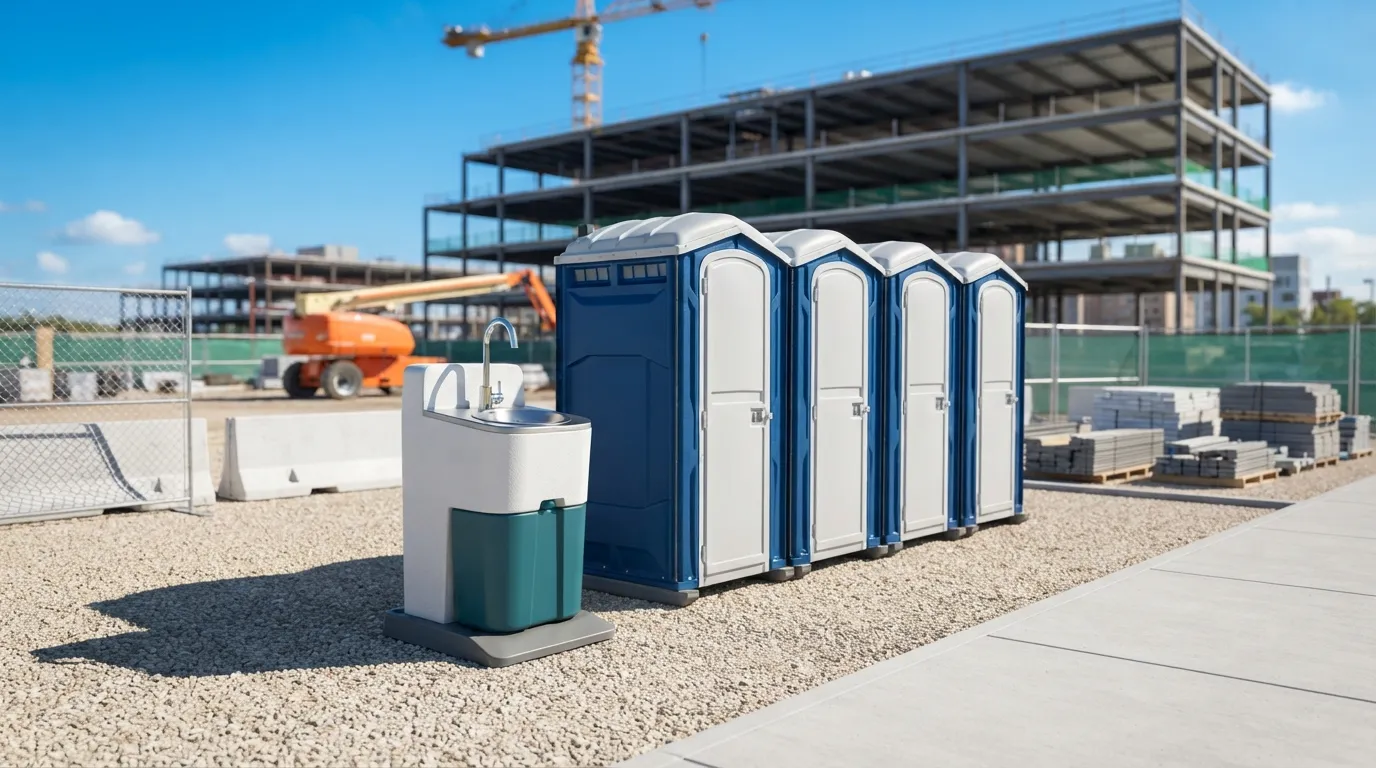
Restrooms belong at the intersections fairgoers already walk through: midway crossings, grandstand exits and the path between parking and the gate. A roll-off delivery for post-event cleanup needs about 60 feet of straight clearance behind the truck, so we scout that access before the fair opens, not after. OSHA 1926.56(a) covers minimum lighting for work areas, and we apply the same thinking to restroom banks used after dark, pairing units with a light tower near evening entertainment. Ground surfaces under and around ADA units need to be stable and slip resistant per ADA Standards 302.1, which matters on a fairground where grass turns to mud fast under thousands of feet. We also stage temporary fencing around service areas and dumpster zones to keep foot traffic clear, and a roll-off dumpster or two near vendor row keeps trash from piling up between hauls. For fairs that also host livestock or 4-H exhibits, see our farm and agricultural restrooms page for wash station setups suited to barn areas.
Pricing for fair-scale restroom orders
| unit | duration | low | typical | high |
|---|---|---|---|---|
| standard | event | 200 | 400 | 800 |
| ada | week | 120 | 185 | 240 |
| trailer | event | 2499 | 3500 | 3899 |
| dumpster | weekend | 390 | 440 | 497 |
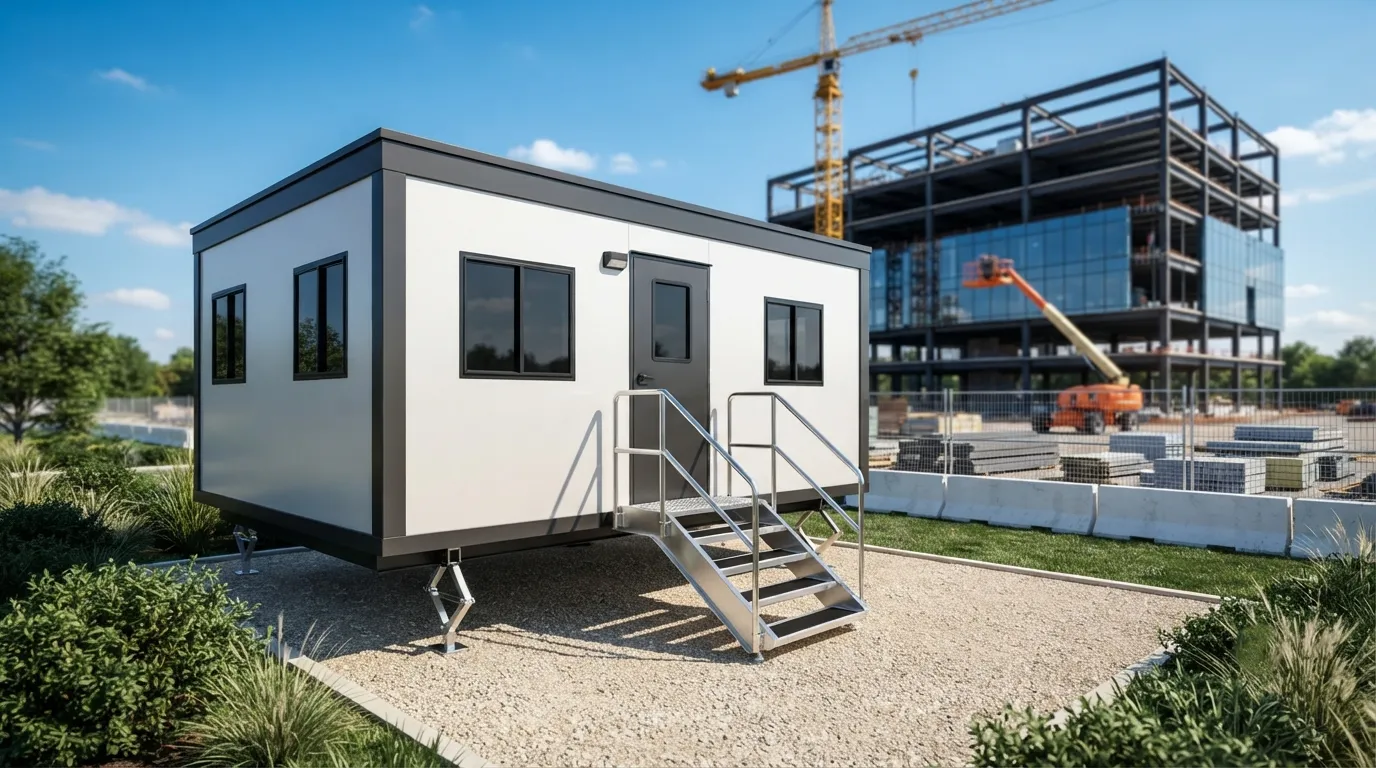
Event-rate standard units cover the full run of a fair without a daily reset in billing. Full details on event restroom rental pricing and our porta potty rental cost breakdown are worth checking before you finalize a headcount.
How far in advance should we book restrooms for a county fair?
Book as soon as your gate count estimate is set, ideally months out, since fairground season overlaps with weddings and festivals across Vancouver. Our request a quote page gets you a placement plan and pricing fast.
Do we need ADA units even if the fairground already has permanent restrooms?
Yes. ADA Standards 213.2 applies to any cluster of temporary units placed for the event, not just permanent facilities, so at least one accessible unit per bank is required regardless.
Can restrooms be serviced mid-fair without shutting down access?
Yes, our trucks service during off-peak hours and route around active crowds. See how often are porta potties cleaned for our standard service intervals during high-traffic events.
What about restrooms for a small county fair or a single-day event?
Smaller events still need at least one ADA unit and enough standard units for peak hour, just at a smaller scale. Check how many porta potties do I need for a quick estimate.
Do fairground restrooms need handwashing stations separate from the toilets?
Yes, especially near food vendors. A handwashing station or portable sink placed near booths keeps compliance with sanitation expectations and keeps lines shorter at the toilets themselves.
Next step
Get a delivery date
Tell us the address, the dates and the headcount. We size the order and confirm the route.